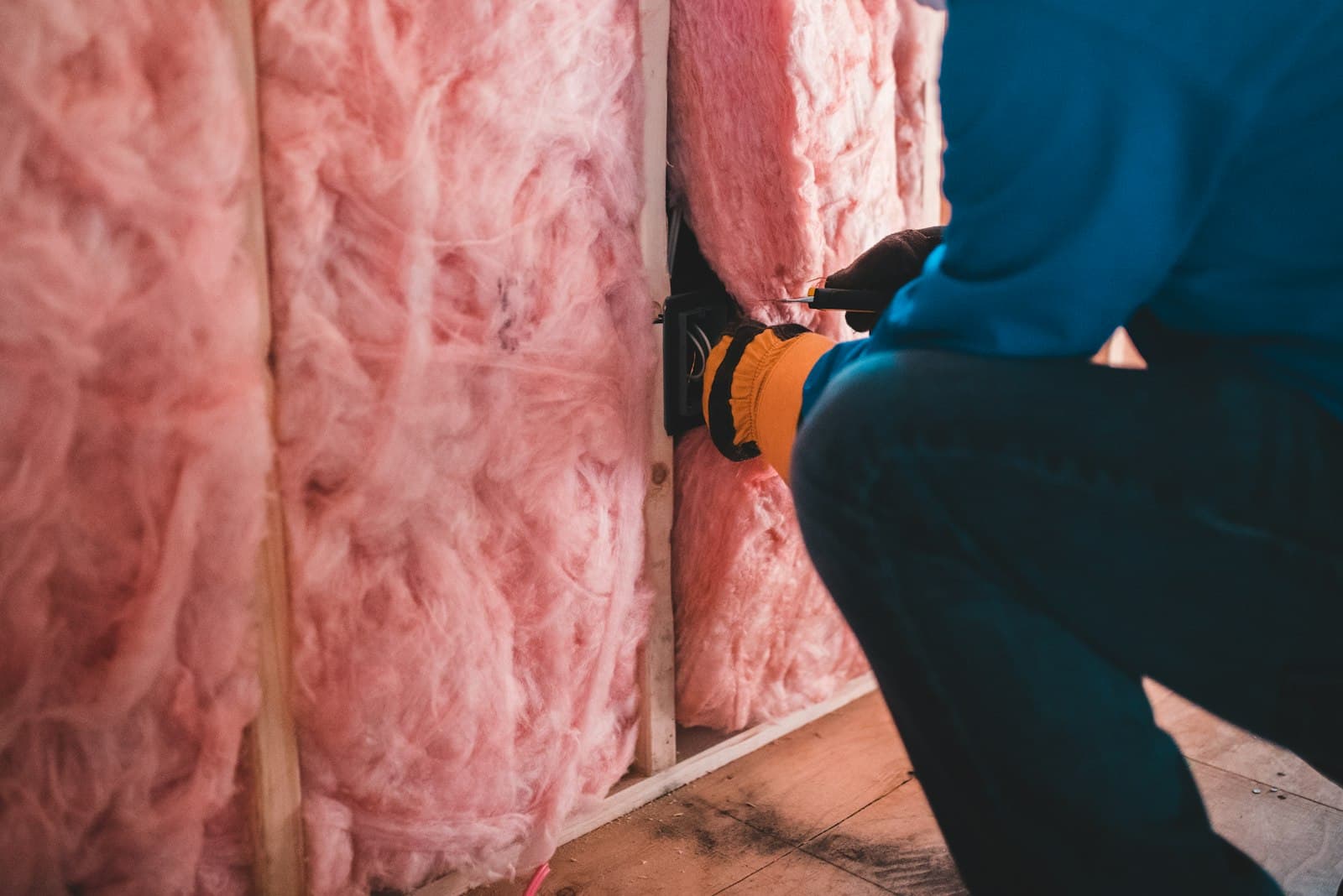
Building Envelope
Your comfort starts with the envelope
Insulation determines how hard your HVAC works, how comfortable you feel, and what you pay monthly. Here's what matters in Florida.
Different insulation materials offer different performance characteristics for Florida's climate.
High-density foam sprayed in place that expands to fill cavities completely. Creates both insulation and air barrier in one application.
Best For
Considerations
Lower-density spray foam that expands significantly. Excellent air sealing at a lower cost than closed-cell.
Best For
Considerations
Pre-cut fiberglass blankets installed between framing members. The most common and cost-effective option.
Best For
Considerations
Fiberglass or cellulose blown into attic spaces. Effective for covering large areas and filling irregular spaces.
Best For
Considerations
Your energy calculations specify an unvented roof deck assembly at R-19. Here's how each approach compares for this project.
From Your Energy Calculations (R405-2023)
Permitted assembly: Unvented roof deck, R=19.0, Metal standing seam
Thick fiberglass batts laid at the ceiling plane. Attic above is vented to outside through soffit and ridge vents.
$5,936
Quoted for this project
How it works
Insulation at ceiling plane. Attic is unconditioned and open to outside air.
Attic temp (summer)
~130–140°F — unconditioned, outside envelope
Soffit / ridge vents
Open and required
HVAC duct efficiency
Ducts sit in extreme heat — significant energy loss before air reaches living spaces
Air sealing
Moderate — relies on batt fit and point foam sealing at penetrations
Utility impact
Higher AC load due to duct heat gain. Estimated $80–150/mo more in FL summer
Moisture behavior
Attic is open and inspectable. Leaks are visible. Assembly dries freely.
FL insurance
No known restrictions. Standard construction.
ERV required
No — passive ventilation through attic venting
Future removal
Easy. Batt lifts out — sheathing replacement straightforward.
Best if
When budget is the primary driver. No insurance complications. Easy to inspect and maintain.
Key trade-off
Higher monthly utility costs and potential permit compliance issue with this energy calc.
Soft foam sprayed directly to the underside of roof sheathing. Attic becomes part of the building envelope.
$7,374
$6,301 main + $1,073 patio
How it works
Foam sprayed to roof deck underside. Attic is semi-conditioned inside the envelope.
Attic temp (summer)
~75–85°F — semi-conditioned, inside envelope
Soffit / ridge vents
Sealed shut — not needed
HVAC duct efficiency
Ducts inside envelope — minimal heat gain. AC works less to deliver conditioned air.
Air sealing
Excellent — foam creates a continuous barrier across entire roof plane
Utility impact
Lower AC load. Most homeowners see meaningful reduction in utility bills year-round.
Moisture behavior
Breathable — allows drying in both directions. Leaks can hide behind foam.
FL insurance
Some FL carriers restrict open cell at roof deck. Verify with insurance broker.
ERV required
Yes — energy recovery ventilator required (~$1,500–3,000 installed)
Future removal
Adhered to sheathing. Additional labor if sheathing needs replacement.
Best if
Best balance of performance and cost. Matches energy calc. Significant HVAC efficiency gain.
Key trade-off
Insurance verification required. ERV adds to total cost.
Rigid foam sprayed to roof sheathing. Denser and thinner than open cell. Attic inside the envelope.
TBD
Request closed cell quote from contractor
How it works
Dense rigid foam sprayed to roof deck. Attic is semi-conditioned inside envelope.
Attic temp (summer)
~75–85°F — semi-conditioned, inside envelope
Soffit / ridge vents
Sealed shut — not needed
HVAC duct efficiency
Same benefit as open cell — ducts protected inside envelope.
Air sealing
Excellent — same continuous barrier with slightly better adhesion
Utility impact
Same efficiency benefit. Marginal additional gain from better vapor control.
Moisture behavior
Vapor barrier — excellent at keeping moisture out. If moisture enters from inside, it cannot escape outward.
FL insurance
Generally accepted. Preferred by most insurers over open cell.
ERV required
Yes — energy recovery ventilator required (~$1,500–3,000 installed)
Future removal
Bonds aggressively. Most difficult and costly to remove.
Best if
Coastal high-humidity or long-term hold. Best moisture and vapor control. Insurer-preferred.
Key trade-off
Highest upfront cost. Rigid — can crack over time. Hardest to remove.
Important Considerations
Energy calculations and code requirements drive insulation specifications.
Manual J calculations determine your home's heating and cooling loads, which affect insulation requirements.
Florida spans climate zones 1-2, with specific code requirements for each.
Your wall and roof construction affects insulation options and requirements.
Beyond code minimum, your comfort and efficiency goals matter.
Minimum insulation requirements for Florida residential construction.
Per energy calculations. Installed right.
Insulation specs come from professional energy modeling—not guesswork. Installation is verified for quality.
Professional Manual J calculations determine your specific insulation requirements.
Insulation type selected based on energy goals and budget—spray foam available.
Certified installers following manufacturer specifications exactly.
Visual inspection and testing to confirm proper coverage and air sealing.
R-values and installation details documented for warranty and resale.
Per Calcs
Insulation spec from energy modeling
Spray Foam
Closed-cell spray foam available
Air Sealed
Complete envelope sealing
Verified
Installation quality inspected
Spray foam typically costs 2-3x more than batts but provides air sealing and insulation in one step. For Florida's climate, the air sealing benefit often pays for itself through reduced HVAC costs and improved comfort. We can model both options to show the difference.
R-value requirements come from energy calculations specific to your home design. Going above code minimum improves comfort and reduces energy costs, but there's a point of diminishing returns. We'll show you the tradeoffs during the design process.
Radiant barriers reflect heat from your roof, reducing attic temperatures. They're effective in Florida's sunny climate but aren't required. Your energy calculations will show if a radiant barrier makes sense for your specific design.
Attic insulation can be added later relatively easily. Wall insulation is much harder to upgrade after construction. If you're considering spray foam, doing it during construction is significantly easier and less expensive than retrofitting.
Start with energy modeling. We'll specify insulation that matches your comfort goals.
Start Design Session